My Personal Experience With Environmental Destruction Caused by Long Wall Coal Mining.
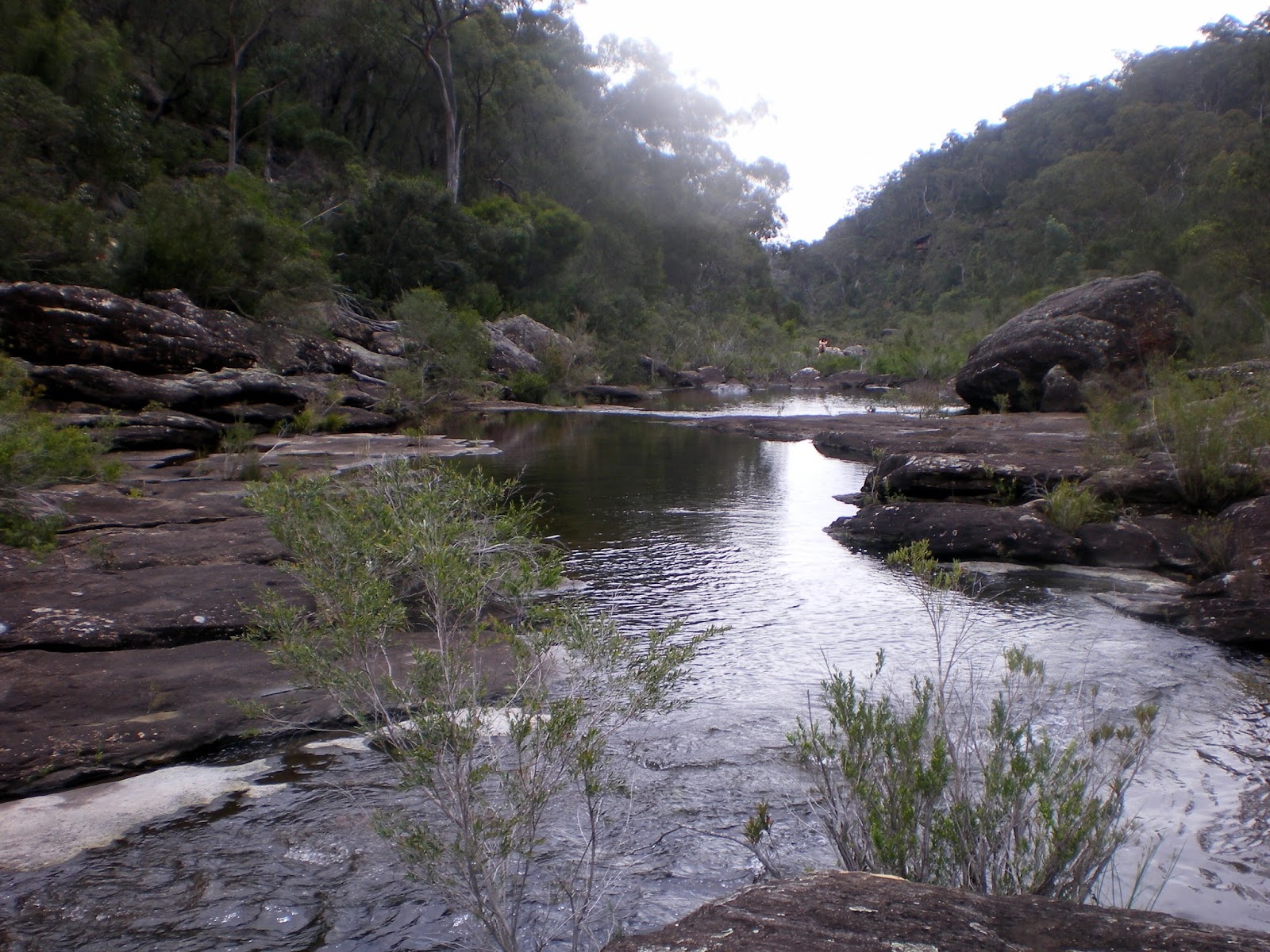
I grew up on a small farm which had been planted as an orchard in the 1960's. We farmed the orchard and the surrounding native bushland was left to nature. We occasionally drew water from the Cataract River at the back of the property when our tanks ran dry. It was a clear running creek at the bottom of a deep gorge...water never tasted this good.
After some years, BHP (then Australian Iron and Steel) established a long wall coal mine on the large property across the road. This was not an entirely welcome development locally, although St Mary's Towers, a monastery owned by the Catholic church, did derive a benefit from the sale of land for the mine and royalties on coal for a period. We did not know then what we know now. There were other mines in the district in Appin and other locations in the Sydney water catchment area between Picton and Wollongong. BHP were careful (required to?) to minimise destruction to the surrounding bushland. In the beginning, it was hard to notice a mine existed because it was hidden behind such dense native forest. We did miss being able to walk or ride on horseback through the bush, and we were no longer able to access the beautiful cave on Allens Creek, a testament to the wonderful art and culture of the Dharawal people of the district.
The mine took several years to establish, by which time our family was ready to move on, but not before coal extraction began and the trucks started rolling in and out. This was the first visible sign of pollution as at this time the waterways were still pristine, animals and birds were still seen in great numbers and there was very little noise or visual pollution.
Within a year, the roadways were black with coal dust as a steady stream of trucks filed in and out of the mine to travel the 40km trip through water catchment country to Port Kembla coal loader. The trees and rocks were black, the roadside was filthy and dead animals lined the road every morning, although this decreased in time as one could imagine the area became less habitable for native fauna. The noise increased as production became a round the clock operation, and the lights and noise at night made it difficult for residents. It only ceased when the miners went on strike. When my parents decided to pack up and go, they sold the farm to BHP, nobody else wanted to buy it.
What has happened in the subsequent 35 years of the mine’s operation is a sad tale of environmental destruction. Mine subsidence in the area damages roads and houses. It makes the surrounding river gorges unsafe due to regular rock falls. Wildlife is no longer abundant as it once was, despite little residential development. The road trees along the road are stunted and black, the soil by the roadside is tainted with black coal dust. It has devastated the local river system. Ventilation shafts, including those still being built pump methane and other gases into the atmosphere and underground the mineshafts cover many kilometres.
It is the Cataract River which flows through a deep sandstone gorge and is part of the Sydney water catchment, which formed the boundary of our family farm. In the mid 1990’s, CSG, released as a result of cracks caused by mine subsidence, devastated the river with deadly effect on ALL riparian vegetation and aquatic life. The beautiful river, where we used to swim and our neighbours would fish, became a graveyard of dead trees and shrubs. This has been well documented, and a straightforward article by Rivers SOS documents some of the damage.
Cracks from mine subsidence not only fractured the river bed causing the creek to drain, it also allowed significant amounts of high molecular weight gas components (C2+ >2.3%), including C6-C8 n-alkanes, branched alkanes, alkylcyclopentanes and alkylcyclohexanes to escape. The result of this was that the soil became anoxic, as the methane replaced oxygen in the soil. Gases escaping at a rate of more than 20l/s led to soil temperatures of over 40 degrees. Vegetation was killed by both increased temperature and oxidation of methane gas and its homologues in the soil. The carbon isotope signature of the methane was similar to that found in CSG. Added to this destructive situation was an upstream dam which restricted the natural river flow. In fact the whole Georges River system has suffered the same fate from mining, and restrictions now prevent mining under rivers in this area. This is just my first hand experience of localized damage.
At a global level, coal as a cheap form of energy fuels electricity plants and drives industry. At every step from mining, transport and its use burning to produce energy, coal causes local and global environmental damage and is a huge contributer to general air pollution and greenhouse gas emmisions.
As a result of this personal experience, I am very opposed to Coal Seam Gas Extraction and Coal Mining. Especially as we have alternative energy sources and we know the damage caused. We can't pretend a coal mine is not a disaster for any district. They are dirty, noisy, polluting, they look awful, they don't benefit the district (other than throwing money at community organizations..peanuts) and at the end of the day, it is such a short term exercise; most of these coal mines are now closing down. They took the money and ran....... very dodgy houseguests indeed.
https://www.whitehavencoal.com.au/environment/docs/part-1-subsidence-assessment-f.pdf
Angela's personal blog for the University of Edinburgh MOOC Course, eLearning and Digital Cultures
Wednesday, 26 August 2015
Thursday, 6 February 2014
Calling Card
I've been an irregular visitor to my own blog, just popping in to redirect mail.
You can now find me here: Digital Education or here: Angela Towndrow
After a wonderful MOOCing adventure in edcMOOC in 2013, I became an eager participant in lots of other moocs, a way to expediate my self education in online learning. In late 2013, I was invited to join the second run of edcMOOC as a community teaching assistant (CTA) with 7 other previous edcMOOCers. Perhaps I will post about that experience later.
However, that prompted me to enroll in the University of Edinburgh Digital Education MSc, and my journey in that course is well underway. Great program, bits of which I am sharing on my new blog Digital Education. Do drop by, say hi, challenge my arguments, or agree with me!
Ary, Maddie, Emily and I had a fun publishing adventure following edcMOOC:
Quadblogging: Promoting Peer to Peer Learning in a MOOC
Realising the Potential of Peer to Peer Learning: Taming a MOOC with Social Media
Wondering what to do with your coursera certificates? Teatowels?
Tuesday, 26 March 2013
#edcMOOC Blogging Survey: Please join in!
This is a call to all edcMOOC bloggers! We have a short survey and we'd love you to take it. We're also interested to hear the experience of those who quadblogged as well, so if you are a "quaddie" please fill it out.
edcMOOC Blogging Survey
Monday, 11 February 2013
Stuff from all over the place: #edcMOOC Artefacts
![]() |
| What edcMOOC represented to me, before the course began |
Videoscribe: What edcMOOC looked like to me
My intro video for etMOOC
![]() |
| Tweetchat Survey |
Animation Software - Powered by GoAnimate.
![]() |
| Always On: What is lost. Week 2 |
![]() |
| Digital Storytelling: Wow, We've Been Glassed |
Saturday, 9 February 2013
Spimal tap: harnessing blogjects of the future to save the world! #edcmooc
Much as "spime" and "blogject" sound like pretty out there notions, I think it is more a matter of application of technology to some already established concepts where objects transmit data in real time via social media or other platforms where data is broadcast to a wider audience, sometimes in another digital form. Some of us created a list of blogjects to add to the smogged out choking pigeons. We found tweeting plants, texting and tweeting house plants, tweeting flies, tweeting birds.
I'm fascinated by the idea of blogjects. I can think of some really apocalyptic visions where blogjects sing about our demise as it happens. (I don't think the world will come quite to this)
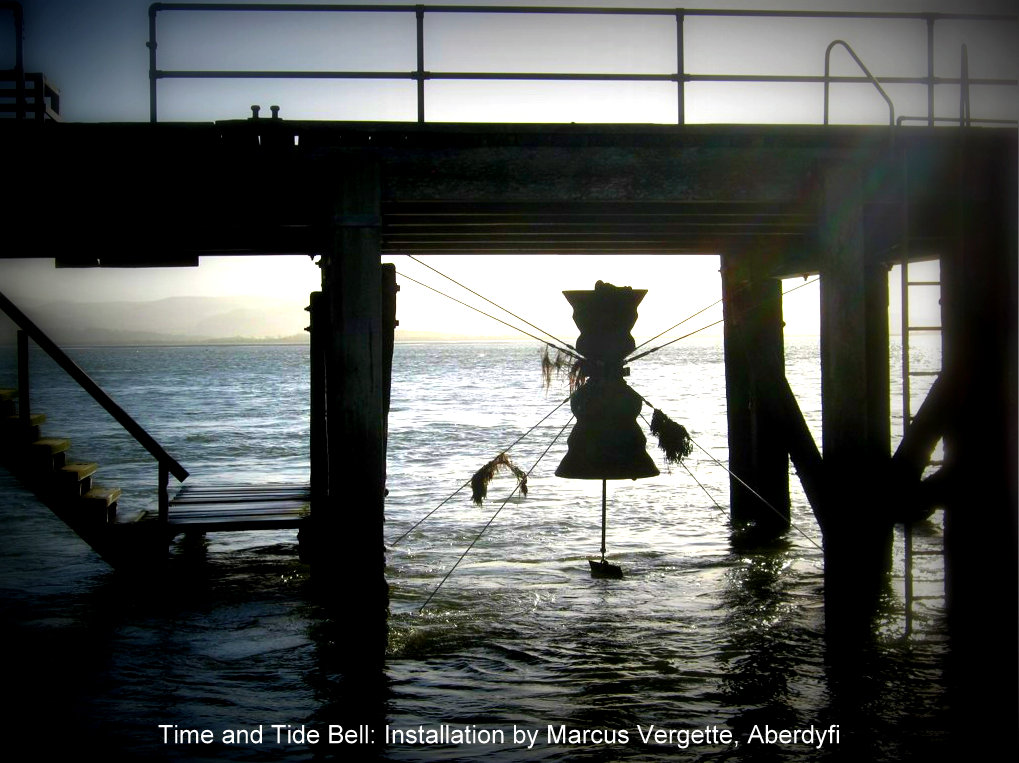
One really interesting project is "Time and Tide Bells" a permanent installation of 12 bells positioned at strategic locations around the UK, from urban centres to open stretches of coastline. "The rise of the water at high tide moves the clapper to strike the bell. Played by the movement of the waves, the bell creates a varying, gentle, musical pattern. As the effect of global warming increases and sea levels rise, the periods of bell strikes will become more and more frequent, and as the bell becomes submerged in the rising water the pitch will vary."
One of the bells is in Aberdyfi, Wales. This is partly to commemorate the legend of the Bells of Aberdyfi which tells of the submerged kingdom of Cantre'r Gwaelod. It is said that the bells of this lost kingdom can sometimes be heard ringing from beneath the estuary waters on still nights.
This is where art, science, mythology and environmentalism intersect. I think the bells would make great blogjects. I can think of some interesting ways the music could be broadcast online by the bells themselves, they could tweet and I'm sure they could post images and mp3 files to their own facebook site.
edcMOOC is really reinforcing the idea that technology must serve a useful purpose in all aspects of life, especially education. For me, it's about the getting of wisdom and using the tools to that end.
I'm fascinated by the idea of blogjects. I can think of some really apocalyptic visions where blogjects sing about our demise as it happens. (I don't think the world will come quite to this)
One really interesting project is "Time and Tide Bells" a permanent installation of 12 bells positioned at strategic locations around the UK, from urban centres to open stretches of coastline. "The rise of the water at high tide moves the clapper to strike the bell. Played by the movement of the waves, the bell creates a varying, gentle, musical pattern. As the effect of global warming increases and sea levels rise, the periods of bell strikes will become more and more frequent, and as the bell becomes submerged in the rising water the pitch will vary."
One of the bells is in Aberdyfi, Wales. This is partly to commemorate the legend of the Bells of Aberdyfi which tells of the submerged kingdom of Cantre'r Gwaelod. It is said that the bells of this lost kingdom can sometimes be heard ringing from beneath the estuary waters on still nights.
This is where art, science, mythology and environmentalism intersect. I think the bells would make great blogjects. I can think of some interesting ways the music could be broadcast online by the bells themselves, they could tweet and I'm sure they could post images and mp3 files to their own facebook site.
edcMOOC is really reinforcing the idea that technology must serve a useful purpose in all aspects of life, especially education. For me, it's about the getting of wisdom and using the tools to that end.
Friday, 8 February 2013
WOW! They've glassed us! #edcmooc
A Day Made of Glass is a horrific vision for the future in my opinion. Corning's dystopic fantasy puts us in a glass prison, for profit. Screened off and distanced from real world experiences and genuine issues like biodiversity loss, deforestation, resource depletion and climate change, the take home message is WOW!
"Saving the Rainforest" was a slideshow I made for my friend Denis who is a passionate lover of nature and a dedicated wildlife warrior. When my little boy saw a movie about orangutans, he was obsessed with swinging on a monkey vine in a rainforest and when I asked Denis where one could be found, he directed us to the 5 acre remnant rainforest in Robertson NSW. It was the only patch of the huge rainforest not cut down by European settlers in the early days of British colonisation of Australia. We found our vines, and with strict instructions from Denis to be very careful with them, we returned with best buddy George and the two boys spent hours swinging like monkeys. After our visits, Jonny, with no prompting by me, wrote a story about saving the trees and animals of the rainforest from woodcutters. WOW!
In my developing notion of digital storytelling, here are my tales of two forests, four children.
This was my original version for Denis who says that in all his years as an environmental activist, this was his greatest achievement. It is my favourite digital story: the photos were taken on the many trips we have made to the forest. And I love the music.
And Corning's promo, for the record.
Thanks Denis, we need mentors.
Tuesday, 5 February 2013
Sync or Sink? A digital tale about syncing with my fraingers and other MOOCers #edcmooc
The latest etMOOC adventure is digital storytelling. I tried 6 photos instead of 6 words. It actually only needs that last image, the rest are pretty dull, but they are part of the story. The final one really says it all, I took it this week while exploring some of the issues I am encountering with connectivism. Have to sort out those png files with blogspot, they don't want to be transparent, gadget needs repaired. Don't you hate that?
![]() |
| MultiMOOCING |
![]() |
| Hanging out |
![]() |
| Supersizing the Convos on Forums |
![]() |
| Synctubing |
![]() |
| Talk talk talk talk |
Tuesday, 29 January 2013
Don't let the brown eyes fool you. Inbox: more than a love story. #edcmooc
Such a feelgood film to watch, pretty girl, awkward guy, paths cross, a twist of fate, simple, delicious visuals, uplifting music
and a happy ending. This film has many layers, and I don't believe there is
much about the production and storyline that is accidental. So it's safe to say
that inferences can be made about almost every aspect, with the assumption that
there is an underlying message embedded.
In Inbox, the utopian ideas are very much about the nature of
relationships: that communication between people is complex and that spoken language is only one means by which we can come to know another person. At the very
simplest level, two people who have not met in person engage and connect through "technology" in the form of mysteriously connected red shopping carry bags through which they are able to send notes and small personal items. They grow their relationship by first exchanging personal
external manifestations of their identities: the teddy (youth, immaturity,
naivety), the makeup (female, sexual)), the underwear (male, mature, sexual).
As time progresses, they explore each other's level of interest in short
exchanges before participating in friendly, arm's length games and eventually
committing to meet one on one.
Technology plays a supporting role in the very human centred interchange, and the visually appealing metaphor of the red bags and the post
it notes represent the functional, spacial and temporal aspects of social
media. It reminded me of those awkward early teenage relationships before sms and social media, where an intermediary was used to pass on little messages to gauge interest and
facilitate that nerve racking first date. In the past, relationships were often
"mediated" in written exchanges that preceded an introduction, and
even this may have been orchestrated by others so that only
"suitable" relationships were pursued. Letters were laced with
perfume, adding another sensory layer, something depicted in the film as not
necessarily always getting the desired result when the woman reacts badly to the
scented objects she receives in her red bag.
In this respect, the film reminds us that in establishing
relationships we feel vulnerable and those early exchanges are fraught with
danger as we decide which aspects of our persona we will lay bare for another
to either accept or reject. This is clearly depicted in the scenes where the
man in his comfortable home environment is without clothes, his fundamental
self, but puts on his glasses, as if through them he may gain insight of sorts.
Into what we don't quite know at that moment. When the time comes when he realises the potential for some sort of relationship with a woman, there is a frenetic moment of dressing, creating a
persona that is crafted to impress. In this representation of technology, we sense that "digital dualism", the separation of the"real and the virtual" in online identity plays no more significant a
role now than it did in the past, and that contemporary technology may be
intrinsically neutral in this regard.
The dystopian ideas are embodied in the plethora of images
of consumerism and financial transactions. The opening scene uses the apparel
store as the setting for face to face opportunities for relationship building.
This scene is a powerful representation of how consumerism is intertwined with
relationships, technology, identity and social interaction. The couple holding
hands are shopping together. The men who work in the store are
highly attuned to the presence of unaccompanied women and either make unwelcome
suggestions, or in the case of our awkward hero (a customer), see his attempts at quietly
observing a woman in the store come unstuck as he knocks over the whole display
of underpants. Fabulous images of packaged masculinity tumbling like dominoes.
And a clear statement of the shortcomings of technology free human interactions. There is a sense that relationships may be purchased, and I am not sure if there is a suggestion of arranged marriage and dowry payment given the cultural context of the film,
In that scene alone, we hear the sound of the receipt
printer (above the music) and are bombarded with consumerist images of
advertising, the computer, the printer (which is a repeated zoom image) and the
processes of social and financial transactions enmeshed with technology. As the
story unfolds, we see that the exchange of objects and messages through the
"inbox" are still connected with economy as messages are written on
the receipts. Finally, when the technology "fails" and the lines of
communication are cut, we are presented with another powerful image of the man
returning to the closed apparel store. I interpret this as meaning that technology will
only be available when there is money to be made from it. No shop, no technology and
dystopically, no relationship. We are
left with the idea that something else, even fate, will serve us better than
technology which has one fundamental purpose in being a tool of capitalism.
OK, that sounded very much like Marxist technological
determinism, and that's exactly how I see it being depicted in the film.
How does this translate to online learning?
I think that if we agree with the ideas in the film, then
technology itself will be neutral in the social interactions required for
social constructivist or connectivist pedagogy. The film suggests that the tool
is immaterial. However the warning is clear, that technology will be a driver
for the most economically beneficial model, which is a gloomy vision for the
future. But this I will explore more fully in another post after I have
reviewed all the films for this week.
Sunday, 27 January 2013
Our Chemical Selves: The Biology of Connectivism
Connectivist Learning: course Prerequisites:
your own device, internet connection, oxytocin and adrenaline
This is my last post before the edcMOOC course starts
tomorrow. Through this blog, I've been living out the connectivist experience
of not one, but two MOOCS, both which are experimental in the connectivist
"genre".
According to the good folk at ETMOOC, the key principles in
the design of such a MOOC are:
• The course is
developed with a weak ‘centre’. While etmooc.org will provide a level of
aggregation, detail, and direction, the majority of interactions are likely to
occur within groups & networks, facilitated through various online spaces
& services.
• Participants are
strongly encouraged to develop their own reflective, learning spaces. We’re
hoping that every learner in #etmooc creates and maintains their own blog for continuous
reflection, creativity, and resource sharing.
• Sharing and network
participation are essential for the success of all learners in #etmooc. Thus,
we’ll be needing you to share your knowledge, to support and encourage others,
and to participate in meaningful conversations.
To fellow students who will embark on eLearning and Digital
Cultures tomorrow, this is a familiar scenario. With an email to participants
suggesting some online platforms, the two themes for the course and an artefact
which is to be produced, course coordinators left us to our own devices for
nearly 3 months and look what happened! All of the above and more, not a
teacher in sight! (Not quite true, most of us are educators of some sort).
Students have been blogging about this extraordinary experience, and those who
have become part of the group later in the piece say they have never seen
anything like it in other MOOCs.
I will don my academic hat and hopefully write something of a more scholarly nature a bit further down the track.
But for now, I'd like to consider my experience as a person, what it
feels like to do a connectivist MOOC and what my concerns are for those
students we might recruit to learn in this way. Yes, concerns.
Firstly
though, what does the connecting in connectivism mean? How do we learn by
connecting? Are we talking "connecting" as in the Matrix where Neo
and friends plug into a computer to enter a virtual world where skills and
knowledge are "learned" through the uploading of programs direct to
the brain? I don't think that is the intention of a MOOC. But I will come back
to this point.
![]() |
| The Matrix: Trinity cares for Neo's physical body while his conscious self lives out an adventure in the constructed virtual realm of the matrix. |
I understand the philosophy behind connectivism to be based
on collaborative learning where we need to connect and engage with other
people, and in the process, create personal learning networks (PLNs)
"The PLN consists of relationships between individuals
where the goal is enhancement of mutual learning. It is based on reciprocity and a level of
trust that each party is actively seeking value-added information for the
other", ETMOOC reminds us.
Herin lies my concern. The bit about connecting, trust and
reciprocity. Going to do my science thing now, but I'm only going to ask some
questions. As reductionist as it sounds, I think we need to pay attention to
how humans, and in fact most (or maybe even all) mammals connect with one another. Without
suggesting that we are just a stack of chemicals with no free will, I believe that much of who we are and what we do depends on biological substances which play
a huge role in shaping our social behaviour.
Two
of the big guns are oxytocin and adrenaline.
Most of know about adrenaline, it's the hormone that gives
us a pleasurable rush in response to stress; quite addictive for some, gaming
software companies depend on it! The pounding heart, the rush, the feeling of
power, the excitement, we've all felt it. It's true, studies show that internet
addicts have a much higher "sympathetic nervous system activation" (ie
adrenaline) when surfing the net. It's measurable, real and problematic that we
can become addicted to our own adrenaline through our online activities.
And oxytocin? It's known as the "love hormone", best known for its role in reproduction, birth
and maternal bonding. Huge surges in oxytocin ensure a new mother only has eyes
for her baby: it is one of the most powerful human bonding responses we see.
We're only just beginning to understand its role in romantic attachment, stress
reduction and tribal bonding. What is even more interesting when we consider
"connectivist learning", is that oxytocin is known for increasing trust and activating the
neuroplasticity required for learning. Paul Zak reports that online social
activities such as facebook or twitter interactions cause measurable oxytocin
surges, so one would assume that the social activities required for bonding,
connection, engagement and trust combined with the brain stimulation of the
learning process would all involve a strong, complex partnership with oxytocin.
This is absolutely not my area of expertise, but I don't think it takes too much to join the dots
and realise that we are playing with some pretty significant biochemical
processes here. I've felt them. I've
bonded with my "peeps" as Laurie refers to us. I look forward to our
online interactions, reading their blogs, being inspired by their writing,
their use of tech tools, their enthusiam for learning and their leadership
within the group. We've all fully embraced the premise and actions of
connectivism, and I'm 100% certain I'm not the only one in the group who might
be just a teeny bit guilty of neglecting some real world activities like sleep,
conversation, social interaction, and OK, laundry. But mainly those oxytocin
related bonding things that are the glue that holds relationships together.
And today, I had another edcmooc hormone response in the
tweetchat. Talk about adrenaline! Those tweets were coming at us so fast it
gave me a rush! And again, I know I am not alone in that response because I
sent out a short survey and results that have come in already are littered with
words like "buzz", "excitement", "exhilaration". Fellow student Chris confirms it. Adrenaline!!!!!!
I think when we ask
students to enroll in connectivist courses, we should perhaps warn them that the
pedagogy requires hormonal input. We need to warn them that these activities
might be addictive and that nothing is quite like the deep pleasure of the oxytocin
driven social bonding experience or the rush of our own adrenaline. And
importantly, that we don't yet fully understand the health and social
implications of activities which are part of the learning environment which
depends on those and other hormones. (well we have a few clues that too much time online is not
healthy for real world activities, so we can't plead ignorance)
Has anyone at the helm thought this through yet, or are they
so busy getting a rush out of watching enrollments climb to tens of thousands in
a matter of weeks that they have missed this? And so immersed in the engagement
and social experience themselves that it hasn't occurred to them what this
might mean for students, for families and communities in the greater scheme of things.
Maybe I've jumped the gun in exploring some of the things
that make us human, and what that might mean in the online learning context. But
I have spent some time reflecting on my evolving connectivist experience and I couldn't help looking at Trinity in that scene from the Matrix and wondering
of there is any real difference in the disconnect that exists between Neo's
consciousness and his body and the resulting disconnect from Trinity and what
students may experience with online learning, not through a direct wired in
physical connection, but a biochemical one.
Friday, 25 January 2013
Lost In Translation: Understanding Digital Identity and Connection
One of the great joys of participating in edcmooc and etmooc is reading everyone's blogs. I'm an avid reader, a voracious learner and often lose myself for hours, completely immersed in everyone else's thoughts (usually way past midnight). One of the topical themes this week is digital identity (springing forth from etmooc) and there are no shortage of links on twitter to a range of publications on the peculiar ways our many different personas come to life in this curious space. I'd like to tease out my thoughts on digital identity by thinking about not only the way we write in our blogs, but what we write about and how digital identities might shape the kind of connections we form as students in these courses.
This week, I stumbled on etmoocing colleague Catherine's post on "Enacting Digital Identity" which looked at "digital dualism", the idea that there is a clear separation between the "real" and the "virtual"and the complexity of interaction between student and teacher in those contexts where the enactment of digital identity poses some interesting questions. Catherine writes wearing her educator's hat, and although this post (and other excellent entries in her blog) was written before etmooc, I gather there might be some discussions happening in the mooc where her experience in teaching about this has been harnessed within the learning community. For me, etmooc is so nebulous that I really struggle to find where these conversations occur and I sense them only through the ghostly digital footprints they leave in the twitter and blogospheres. One day I hope to nail one down and join in, but that's another story....
Also this week, fellow student Ary, in her unmistakably intimate style, delved into how others may perceive and judge us through the identities that we project in the digital realm. "To Cyberspace with Love" is a very reflective piece which takes us on a journey from identity in the real world (as seen through the medium of film) to cyberspace where, through the opportunity for self discovery, we might find a comfortable niche in which aspects of self which struggle to thrive in the world of light and air can blossom. (Woah, long sentence)
The other post I really enjoyed was written by Susana. "A general idea" is a philosophical discussion about the way knowledge is constructed and how that relates to the revolution in education of which we are all part. Whilst not about digital identity, Susana is unleashing her inner English speaking self, hoping that her Spanish friend sits quietly in the background. And although a bit of Spanish thinking finds its way onto the page, nothing is lost in translation: the messages in this article come through loud and clear. In fact, I just love reading the thoughts of people for whom English is not their native tongue. They often have the ability to drill straight to the point without the extravagant excesses of verbal profusion. And besides, it is often poetically beautiful in its simplicity and unique expression.
And so to myself, what have I chosen, subconsciously or otherwise, to project through what I write and how I write about it? I have consciously decided to steer clear of my academic persona. It's pretty dry (I have one of those highly focused scientist's brains) and if that was what I chose to present, then nobody would give my blog a second look and I'd be friendless in this community. Besides, it's too boring and requires too much brain grinding for a summer holiday activity.
Much of my life's writing has been as a ghost writer. Now psychotherapists could have a field day with that one, especially since I write for my husband, whose unstructured, humorous and highly unconventional, engaging style I can emulate with such similarity that his editors cannot tell which is his and which is mine. Actually, they have never known it wasn't him, so fortunately I use my own name (not my married title) in my online projections of self. Please keep my secret safe. Actually, that's not entirely true. I use my own name because it is my own name and in cyberspace, I can choose whichever name I want. Period.
Do I write as a teacher? Maybe I identify myself as one, but I write with such lack of discipline here on my blog, that I certainty don't sound like one. Anyhow, I'm not really a teacher, I'm a tutor, a mentor a facilitator. That's the conscious way I choose to tag myself.
So who am I here? I don't actually know, I think it's me. It's a journalling me, thinking aloud in words, thrashing an idea out on a keyboard. I thought there was only one me, but I can see there are many, all those different people in my head! When we hook up on our MOOC journey, which person will it be that others think they are connecting with? And which of their selves will I make friends with?
I'm drawn to Ary's writings because they are personal, vulnerable and inviting.They don't exclude you, they draw you in and inspire you to question. I've talked with her online, and she's actually a lot like her writing self. I'm drawn to Catherine's writings because they are interesting and authoritative. I kind of trust that what she says is well informed and "right". I'm drawn to Susana's blog because I'm intrigued to follow her development through the course, to see how her ideas emerge as she develops fluency of thought and language. I haven't had the opportunity to find out if Catherine and Susana are their moocing writing selves. I guess we are an aggregate of our personas, so that "writing self" will be in there somewhere.
I'm not in this for grades or a job or to use my writings for another course. I'm here for fun, intellectual stimulation and to learn some practical things about eLearning and develop some insight into the humanity of our relationship with technology. So I guess I will be drawn to those who it seems will partner me in that quest, whether just by virtue of their online presence or perhaps by a more connected relationship which may develop in whatever way. It will spring first from what they write and how they write it. If I don't understand what they are talking about, or if I don't identify with the person who emerges from that writing, then we won't connect. I suppose those who will connect with me will do so for reasons I will probably never know, although it will be someone who isn't put off by the rambling self indulgent nature of my blog.
Either way, it will be because what we write will need no translation, whichever one of our mulitple identities is putting it out there!
Future Identities: http://www.bis.gov.uk/assets/foresight/docs/identity/13-523-future-identities-changing-identities-report.pdf
Tuesday, 22 January 2013
Gatecrashing a MOOC: #etmooc & #edcmooc
Woah, this was scary but I survived.
Skip to the end if you just want the bottom line:
Scenario 1 edcmooc:
Intro letter in November, course starts January 28, nearly 3 months of student led networking community building, all 150 of us, slowly coevolving together.
Then the next course email and within a week there were 2000 on fb. Those coming in were overwhelmed by what we had been done already and felt that they had come late to the party. Those of us already there felt swamped by the sheer size of the sudden influx, flailing arms and legs in the whirlpool.
Much tweeting and blogging about this development. Seems we are too hung up with technology, having conversations in too many places, focusing on the tools not the course content (I'm fine with that, I think we should leave it until we start or we will be "talked out"). Seems some are feeling invaded, others don't know if they will find their new study buddies in these giant forums when the time comes.
As a teacher, I have learned much about student engagement and am building a new orientation module into the units I help teach, so far all based on my edcmooc experience. You guessed it, Chris's map, longer lead in time, social networking, more opportunities to connect, more explanations of the pedagogy, some new curation activities based on scoopit and diigo and yes, even a sketch video.
Scenario 2 etmooc:
Less than a week ago, a fellow edcmoocer lured me to join ETCMOOC. The course had already begun, I was a week late to start, short of time with other commitments, not to mention sporting a monster headache from digital overload.
I went to the website, the g+ and twitter where I'd already been exposed to the etmooc hashtag, so that was slightly comforting. Apparently the first activity was to do an introductory blog, so within a few hours I had whipped one up, complete with embeded youtube slideshow video (with a soundtrack) and added it to the blogroll. Lots more views, so they must be able to see it. Phew...... done.
Now to work out what the heck is ETMOOC. What is ETMOOC? Who is running the course, which people, which uni, is it a uni, do I get a funky Coursera certificate, how long is it, what the hell am I supposed to do?
Now I'm the gate crasher. Most confusing. I feel like the new kid at school who has to walk in to a full class and find a seat. I know I have some friends here somewhere, but where are they? Where do I go, what do I do? But I've learned a lot of connection skills in edcmooc, so today I spent about an hour reading student blogs, checking twitter and finding the links to the activities I've missed, because for the life of me, I couldn't find out where to go from the website. Tried to access blackboard, no java on my laptop, no problems been there before. Watched last weeks tut, sorted the calendar, installed a world clock so I don't have to keep working out the time difference.
So now to my point. Fate has sent me a kind of inverse experience, two flipped scenarios operating in parallel. I'm in a freaky multiverse where everything is upside down and inside out. Same same but different.
Scenario 3 Angela:
So now how is my orientation module looking for my own (online) course? This morning, I was thinking about those who might come late to the course, how I could link them up with a pal to hold their hand through the experience, help them find a seat in the classroom and show them to their locker kind of stuff so they don't feel stranded, the way I was feeling.
But you know what, I've decided that fortune favours the brave. Today I've been pretty brave for a less than socially competent person. Today I learned that I can do "connectivism". I'm glad my little whimpers for help on g+ went unheeded because I was forced to do what I want my students to do, and that's to CONNECT and ENGAGE.
I'm going to add mark 2 of my video (it's all still in my head, I don't have to redo anything) to the initial list and it's going to be about connecting no matter when you join, no matter who is already there, no matter what they have already done. And when new people join, reach out and connect with them too. It's going to be about taking responsibility for your own learning experience, from woah to go, from making connections, to finding your own way around to working out your own goals to MAKING IT HAPPEN for yourself. And in doing that, you become learner and teacher: we all learn together. Because the support is there, you just have to connect to find it.
I've learned something valuable today. Connecting with others is our responsibility. If we sit back like a wallflower and wait to be rescued we will be waiting all our lives. And that goes for the virtual world as well. Ahhhhh, digital cultures, eLearning, technology and media, enough to give me brain explosion.
p.s. I still don't know what etmooc actually is and all those other questions! Perhaps I'll find out tomorrow.
Skip to the end if you just want the bottom line:
Scenario 1 edcmooc:
Intro letter in November, course starts January 28, nearly 3 months of student led networking community building, all 150 of us, slowly coevolving together.
Then the next course email and within a week there were 2000 on fb. Those coming in were overwhelmed by what we had been done already and felt that they had come late to the party. Those of us already there felt swamped by the sheer size of the sudden influx, flailing arms and legs in the whirlpool.
Much tweeting and blogging about this development. Seems we are too hung up with technology, having conversations in too many places, focusing on the tools not the course content (I'm fine with that, I think we should leave it until we start or we will be "talked out"). Seems some are feeling invaded, others don't know if they will find their new study buddies in these giant forums when the time comes.
As a teacher, I have learned much about student engagement and am building a new orientation module into the units I help teach, so far all based on my edcmooc experience. You guessed it, Chris's map, longer lead in time, social networking, more opportunities to connect, more explanations of the pedagogy, some new curation activities based on scoopit and diigo and yes, even a sketch video.
Scenario 2 etmooc:
Less than a week ago, a fellow edcmoocer lured me to join ETCMOOC. The course had already begun, I was a week late to start, short of time with other commitments, not to mention sporting a monster headache from digital overload.
I went to the website, the g+ and twitter where I'd already been exposed to the etmooc hashtag, so that was slightly comforting. Apparently the first activity was to do an introductory blog, so within a few hours I had whipped one up, complete with embeded youtube slideshow video (with a soundtrack) and added it to the blogroll. Lots more views, so they must be able to see it. Phew...... done.
Now to work out what the heck is ETMOOC. What is ETMOOC? Who is running the course, which people, which uni, is it a uni, do I get a funky Coursera certificate, how long is it, what the hell am I supposed to do?
Now I'm the gate crasher. Most confusing. I feel like the new kid at school who has to walk in to a full class and find a seat. I know I have some friends here somewhere, but where are they? Where do I go, what do I do? But I've learned a lot of connection skills in edcmooc, so today I spent about an hour reading student blogs, checking twitter and finding the links to the activities I've missed, because for the life of me, I couldn't find out where to go from the website. Tried to access blackboard, no java on my laptop, no problems been there before. Watched last weeks tut, sorted the calendar, installed a world clock so I don't have to keep working out the time difference.
So now to my point. Fate has sent me a kind of inverse experience, two flipped scenarios operating in parallel. I'm in a freaky multiverse where everything is upside down and inside out. Same same but different.
Scenario 3 Angela:
So now how is my orientation module looking for my own (online) course? This morning, I was thinking about those who might come late to the course, how I could link them up with a pal to hold their hand through the experience, help them find a seat in the classroom and show them to their locker kind of stuff so they don't feel stranded, the way I was feeling.
But you know what, I've decided that fortune favours the brave. Today I've been pretty brave for a less than socially competent person. Today I learned that I can do "connectivism". I'm glad my little whimpers for help on g+ went unheeded because I was forced to do what I want my students to do, and that's to CONNECT and ENGAGE.
I'm going to add mark 2 of my video (it's all still in my head, I don't have to redo anything) to the initial list and it's going to be about connecting no matter when you join, no matter who is already there, no matter what they have already done. And when new people join, reach out and connect with them too. It's going to be about taking responsibility for your own learning experience, from woah to go, from making connections, to finding your own way around to working out your own goals to MAKING IT HAPPEN for yourself. And in doing that, you become learner and teacher: we all learn together. Because the support is there, you just have to connect to find it.
I've learned something valuable today. Connecting with others is our responsibility. If we sit back like a wallflower and wait to be rescued we will be waiting all our lives. And that goes for the virtual world as well. Ahhhhh, digital cultures, eLearning, technology and media, enough to give me brain explosion.
p.s. I still don't know what etmooc actually is and all those other questions! Perhaps I'll find out tomorrow.
Sunday, 20 January 2013
12 steps to Addiction Recovery? I Just Want to Have Fun
Hi , I'm Angela and I'm a MOOCaholic.
That's the first time I've said those words. They don't sound as bad as I thought they would. Maybe I can live with that.
I've completed one MOOC with Coursera (Introduction to Sustainability), I'm about to start two more within a week. I have another one beginning in February another in March and another two at dates yet to be announced.
So when fellow edcMOOCer, Ary asked me to join ETMOOC, I said, "No, I'm sorry, I'm too busy".
"C'mon", she said, "it will be fun, we can do it together, you, me and all our other edcMOOC fraingers".
So I looked at my diary. I'm in the last 3 days of a long, searingly hot summer holiday, about to restart work where I tutor in a fully online post graduate course at the University of Western Australia. We have 4 x 14 week units to update, several more to put together and only 4 weeks in which to do it. No problems.
What about family life, remaining activities for school holidays, my huge 11 acre farm that I maintain and those other MOOCS?
And that PhD I'm meant to be starting?
Within 12 hours I had registered with ETMOOC, messaged Ary to tell her I'm in, hastily put together a slide show with the wrong music and here's my intro.
In writing it, I realise that not only am I a MOOCaholic, techaholic and OK, chocaholic, I'm also totally addicted to learning. I don't care if I'm a teacher or a student or just mooching around, I always have an insatiable desire to know things, how things work, what things mean, how we learn, how we can inspire others to learn, how we can know the truth, what might the future hold, how can we make the world a better place.
I know things have a good chance of going pear shaped. There are not enough hours in the day to do what I want in the next two months, but hey, I'll deal with it all after that.
I used to be addicted to lateness, but I overcame that and now it causes me a great deal of anxiety to be coming into ETMOOC at the end of the first week, but I've been following those tweets that have hashtags to edcmooc as well as etmooc, so there are familiar faces and I've probably scooped most of the articles people have put out there in twitter. I'm also blogging already (sorry, I'm using my edcmooc blog) and use blackboard, so I'm hoping all will be fine if I jump on board and have some fun.
As for my addiction, 12 steps just ain't gonna be nearly enough!
Here's a slideshow with some of the things that really matter to me in my life. Sorry Ary, I had to emulate your concept due to time constraints (imitation is the most sincere form of flattery) but I just couldn't match your wonderful audio.
That's the first time I've said those words. They don't sound as bad as I thought they would. Maybe I can live with that.
I've completed one MOOC with Coursera (Introduction to Sustainability), I'm about to start two more within a week. I have another one beginning in February another in March and another two at dates yet to be announced.
So when fellow edcMOOCer, Ary asked me to join ETMOOC, I said, "No, I'm sorry, I'm too busy".
"C'mon", she said, "it will be fun, we can do it together, you, me and all our other edcMOOC fraingers".
So I looked at my diary. I'm in the last 3 days of a long, searingly hot summer holiday, about to restart work where I tutor in a fully online post graduate course at the University of Western Australia. We have 4 x 14 week units to update, several more to put together and only 4 weeks in which to do it. No problems.
What about family life, remaining activities for school holidays, my huge 11 acre farm that I maintain and those other MOOCS?
And that PhD I'm meant to be starting?
Within 12 hours I had registered with ETMOOC, messaged Ary to tell her I'm in, hastily put together a slide show with the wrong music and here's my intro.
In writing it, I realise that not only am I a MOOCaholic, techaholic and OK, chocaholic, I'm also totally addicted to learning. I don't care if I'm a teacher or a student or just mooching around, I always have an insatiable desire to know things, how things work, what things mean, how we learn, how we can inspire others to learn, how we can know the truth, what might the future hold, how can we make the world a better place.
I know things have a good chance of going pear shaped. There are not enough hours in the day to do what I want in the next two months, but hey, I'll deal with it all after that.
I used to be addicted to lateness, but I overcame that and now it causes me a great deal of anxiety to be coming into ETMOOC at the end of the first week, but I've been following those tweets that have hashtags to edcmooc as well as etmooc, so there are familiar faces and I've probably scooped most of the articles people have put out there in twitter. I'm also blogging already (sorry, I'm using my edcmooc blog) and use blackboard, so I'm hoping all will be fine if I jump on board and have some fun.
As for my addiction, 12 steps just ain't gonna be nearly enough!
Here's a slideshow with some of the things that really matter to me in my life. Sorry Ary, I had to emulate your concept due to time constraints (imitation is the most sincere form of flattery) but I just couldn't match your wonderful audio.
Tuesday, 15 January 2013
My #edcMOOC Freakout
This is the bit I'm not sure I can cope with. Happily bumbling along with 160 odd pre-edcmoocers when suddenly, with the arrival of an email, it's 32,000, or maybe even more. Leaping into the facebook group faster than several of us can click "add"!
The people joining the group share the same enthusiasm as those of us already engaged, and many are commenting that previous activities and discussions are useful in terms of both content and creating a buzz for the course start in 2 weeks. It's great. New conversations, new perspectives, new talents.
Google+ has taken on new meaning giving it the much needed boost by creating the critical mass required to get it going. Fantastic.
In one respect it's very exciting, it's what MOOCs are all about, lots and lots of us connecting, sharing, inspiring, learning. But as I have articulated in earlier posts in this blog, my comfort zone lies really in a SMOOC, a SMALL MOOC, oxymoron though that may be. I'm feeling a little overwhelmed by the sudden enormity of our group and wondering how that might impact on my ability to function in the online social context of edcMOOC.
The safety of our little bubble has gone, and our very encouraging frainger group, as Ary has christened us, will integrated into the larger whole. Or maybe not. Perhaps it's the creative element of the course that has me feeling a bit tentative. Will we still be able to find Chris's suggestions which encourage us to take baby steps towards something new and challenging? As adults, we can feel very exposed when we have to create something for others, especially when one is not so creative....
![]() |
| Image Courtesy Dr S Seay, Licensed Psychologist....... |
However, I can't retreat to a corner and do quizzes, only one way to participate in this course, and that's together. So I think I've just got to let go of whatever I'm snagged on and go along for the ride, after all, that's what I signed up for!
There. Done it. Heart on the sleeve and got it out. Serious journalling going on in this post. I might make a new video,"On Second Thoughts", that transforms us of the "32000" into "real people", and not just a MOOC statistic! All part of the MOOC learning curve.
"First Throw" http://youtu.be/9j-zuCy2NrY
Saturday, 12 January 2013
Left brain, right brain, no brain #EDCMOOC
Inspired by Chris to create an image, I've made a video. Only because I couldn't think of a still image, but rather something that was arrived at. So thanks to Chris and Elena, I've discovered a new tool, VideoScribe.
Chris invited us to contribute to his flickr group by creating an image of "what a MOOC means to you". Well at the moment, I'm only thinking about edcMOOC, although I am enrolled in another one, to which I have given absolutely no thought.
My vision is going up to a friendly place in the cloud where we can do all this wonderful stuff together through edcMOOC and have fun and achieve some inspirational results.
So here is my image, this is what MOOC means to me right at this moment. I had to stop adding names, because it was getting out of hand, but everyone who is engaging in the course is in my heart, sorry I couldn't put all our names there!
Chris invited us to contribute to his flickr group by creating an image of "what a MOOC means to you". Well at the moment, I'm only thinking about edcMOOC, although I am enrolled in another one, to which I have given absolutely no thought.
My vision is going up to a friendly place in the cloud where we can do all this wonderful stuff together through edcMOOC and have fun and achieve some inspirational results.
So here is my image, this is what MOOC means to me right at this moment. I had to stop adding names, because it was getting out of hand, but everyone who is engaging in the course is in my heart, sorry I couldn't put all our names there!
This was a hell of a challenge for me. I can't draw, and whilst I am a keen photographer and enjoy capturing images, I'm hopeless at creating them. So I'm grateful for the prompt to do something along these lines.
I've also been struggling with my disappointment at not being able to create a sketch video as Kyle showed us (sorry Kyle, just realised your name isn't in my pic), due to no sketching skills. So when I saw Elena's video, it looked like the tool meant for me.
Took a couple of hours to master, there are great tutorials on youtube. I hope I can make another one while I am on a roll, because there is a lot of potential do do some pretty good things once you get the hang of it. I did encounter a few issues with freezing, and developing some camera view skills to make it smoother is something I will need to work on. But all in all, a right brain task for a very left brain person....I'm reasonably happy with my first throw.
Tuesday, 8 January 2013
Pushing the Envelope
21st century education. It’s as conceptually different from 20th century education as one could imagine. As teachers, we are preparing our students to learn and function in a world which is experiencing rapid change, a big part of which is revealed through the virtual environment. The overall rate of technical progress (the paradigm shift rate) is doubling every decade. The technological progress that will occur in the twenty first century will be equivalent to the changes that would have taken place across 200 centuries at the rates of change prior to this acceleration. Our modern, highly connected culture is experiencing a phenomenon known as “space time convergence” where the space between people and ideas is compressing. It’s a fast world, and getting faster. In light of this, apparently, much of what was taught in the twentieth century is no longer relevant. Students need different skill sets which include a more collaborative approach to problem solving, the ability to evaluate vast amounts of readily available information, a capacity for critical and reflective thinking as well as a creative approach to meet the new challenges of a living in a rapidly evolving global community. They need to be adaptable, resilient, empathic, connected, flexible, communicative. As teachers, we need to facilitate learning so it is appropriate for this exponential age in which adaptability will be crucial.
In this post, I'd like to explore my own (never ending) learning journey in this extraordinary era. Maybe some clues will emerge, and if not, at least I will have raised some questions.
A few mornings ago, I had an abrupt, early awakening, with my nine year old son asking, “What is eight times nine?”
In a semi lucid state, before dozing back to sleep, my instant answer was seventy two At breakfast, I asked if he had woken me with that question, (in case it was a dream) and indeed he had.
“Why did you ask me?” I enquired. “Don’t you know the answer?”
“No Mum, I have to work it out and I couldn’t be bothered,” was his reply.
So the assumption was that I just “knew” the answer. Which of course I do, because I am of a generation that rote learned, amongst other things, my times tables, to be regurgitated without thought when awake, asleep or semicomatosed.
But for a child in year three, apparently, eight times nine is really eight times ten minus eight. Or possibly eight times eight plus eight. Perhaps seventy two is a side issue. Our start at a Steiner school, where the philosophy is very much about teaching children a love of learning and how to learn, made me comfortable with the priority being “working it out” rather than memorising. Even if working it out means asking someone else who knows. The basis of collaboration. Fine. We’ve all come some distance since rote learning of everything was THE way, even if Steiner thought of teaching people how to learn as well as what to learn way back in 1907.
As a scientist, (albeit not a practicing one) with extreme left brain style cognition and all that comes with being a visual, object oriented learner, a return to higher education 3 years ago caught me somewhat off guard when I experienced a very different way of doing things.
I’ll share an excerpt from my learning journal in the second week of my fully online post grad course (a baptism of fire, l can assure you)
Week 2:
Education has changed a great deal since I was last a
student, and although I have observed those changes through involvement with my
children at high school and university, it is a little different when one is in
the driver's (or passengers) seat. I’m not sure which one it is yet. Much of
learning these days is about learning. It has been an adjustment to give
appropriate priority to content and process.I have been inclined to approach
content as though I was going to have to sit an exam the following week, and
have realised fairly quickly that the lesson is as much about ways of
considering that content (and that is quite outside of learning about study
methods such as interdisciplinary methodology etc) as it is about the content
material itself, particularly as this unit is an introductory or orientation to
the course. So I am trying to keep a broad perspective so I don't miss the
"lesson".
And by week 10:
I am enjoying the very broad range of perspectives of the
group. So many factors come into the equation: lifestyle, where we live, our
stage of life, our age, our views and backgrounds and and and. I see my way of thinking changing by having been challenged by the views of those younger, those with strong religious conviction, those way more educated than myself, and of course the profs.It seems to be very beneficial to collaborate with people of such diversity, and how easy it is becoming over time to explore ideas quite openly through forum discussion, whether one believes those thoughts with conviction or not.
By second semester, I was asked to give an orientation talk
to new students. To break the ice, I told them that in preparation for starting
the course, I had purchased a pack of A4 envelopes for posting my essays for
assessment. I initially had no concept of what online learning was about, in either the
practical sense nor in terms of a very different way of learning, you know, the
one where you work it out, WITH OTHERS! The one where memorising isn’t really
important, but collaborating, communicating, discussing, experiencing the
different perspectives shared by both teachers and other students. All this was
essential for developing evaluation and thinking skills which could be
creatively harnessed to produce things like critical reflections, shared
through wikis and discussed in forums but certainly not printed out and posted
in an ENVELOPE!
Fast forward two years and I am now tutoring in the same
said course and about to embark on a PhD, most probably about learning outcomes.
To diversify, fill in the gaps learn more about online learning and keep
intellectually stimulated during the semester break and until I organise myself
to be a good doctoral candidate, I’ve embarked on this MOOC journey. My own
personal foray into the exciting, virtual wonderland of connectivism. My post
grad course, although fully online, global in nature and wonderfully
stimulating, is a bit of a blend, very much the social constructivist
experience, but kind of in house.
MOOCS, on the other hand, and especially EDCMOOC, are really propelling me into the social sphere of connected learning. In my first Coursera experience, I couldn't handle the forums. There were too many people. I couldn't make the connections. It was overwhelming.
So I did my 20th century default number, watched the
lectures, did the readings, learned the material and took the quizzes, learned
a lot about sustainability and felt very good when I got my certificate.
Not so in EDMOOC! I’m connected, talking, synchronously and
asynchronously, with people from different cultures, of all ages (well a few
ages, mostly adult one would assume), from all manner of backgrounds, interests
and skill bases. Together, even though at this stage we are really a SMOOC, we are
discovering much about learning, teaching, social networking, different social
media platforms, digital cultures, sharing, cooperating, collaborating,
enthusing, encouraging and helping. I love this way of learning. And THE most
amazing thing……no teacher! Well not yet. How very un20th century is that!
I see connectivism as a means of learning where we might
like to think about the depth, beauty and application of mathematics, the
aesthetic pleasure to be derived examining patterns and form, or from the
multitude of ways one might arrive at a result. In this context, seventy two
could represent something cultural, artistic or even spiritual. The connected
experience of discussing seventy two can build new understandings, forge new
connections and build bonds to help us work things out together. And other
cultural perspectives may shed new light on seventy two or nine and eight. And
9 x 8 may or may not still equal 72, but we might arrive at a better
understanding of this equation.
This is a long post, but what I’m really trying to do here
is think out loud about my learning journey and in this context, explore the need to prepare students for a changing world.
Adaptation is what makes humans so successful. How much do we really need to
be prepared for coping with change, even rapid change? After all, it’s what our
species does best is it not? The thinkers will think, the inspired will engage,
the resilient will bounce back, those who don’t compete will cooperate, those
who love to learn will embrace new technologies, challenges and ways of
learning in a changing environment
regardless of how they were taught.
I’m quite astonished at my own adaptability, my rapid
exploration and uptake of new technologies, software ideas, methods and ways of
thinking. 9 x 8 = 72 has served me well. It hasn't prevented me from getting
the most out of the social learning experience or the connectivist adventure. I
cope well with the pace and nature of 21st century challenges. Maybe for a 20th
century person, this is pushing the envelope although I'm more inclined to think its
just an example of how we all respond to change regardless of the pedagogy of
our formative learning experiences.
http://www.kurzweilai.net/the-law-of-accelerating-returns
http://learning.ewfi.org/ewf/
Subscribe to:
Posts (Atom)